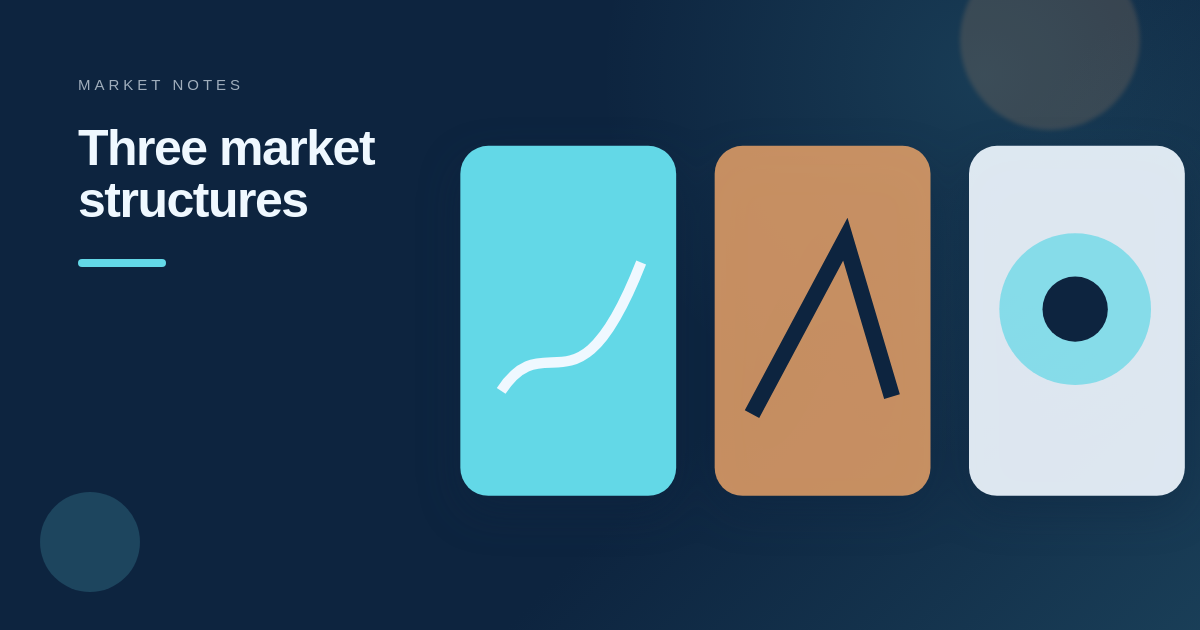
The word “exchange” can refer to several different kinds of crypto market. A spot venue matches buyers and sellers who trade the underlying asset; a derivatives venue lists contracts whose value is linked to an asset; and a decentralized exchange typically coordinates swaps through on-chain software. These categories can overlap in a company’s product catalogue, but their mechanics, risks, and data are different. Knowing which market a chart or ranking describes is the first step toward making a fair comparison.
Spot markets: trading the asset
In a spot market, a buyer exchanges one asset for another under the venue’s rules. A centralized exchange commonly maintains an order book that matches orders and handles account balances, while a decentralized venue may use smart contracts and liquidity pools. The details vary, but the intended result is a trade in the asset itself or a token representation of it. The displayed price comes from the market’s orders and recent trades, not from a universal central quote.
Spot activity is often summarized through price, volume, spread, and order-book depth. Volume describes trades over an interval; depth describes visible interest at nearby price levels. These measures are related but not interchangeable. A venue can show substantial turnover over a day while having limited depth at the moment someone checks. Also confirm whether the pair uses a fiat currency, a stablecoin, or another crypto asset as its quote.
Derivatives: contracts linked to an asset
A derivative is a contract whose value is tied to an underlying reference, such as Bitcoin or Ether. Futures, perpetual swaps, and options have distinct terms. Some contracts settle in cash or another asset rather than delivering the underlying coin. Leverage may amplify both gains and losses, and funding or expiry rules can influence the contract’s price. These mechanics mean a derivatives quote should not be described as a spot trade in the underlying asset.
Derivatives data can help explain positioning and hedging activity, but it is easy to overread. Open interest measures outstanding contracts under a provider’s definition; it is not a count of individual traders or a direct forecast. Funding rates reflect contract-specific mechanisms and can change as market conditions shift. Liquidations may occur when positions fall below requirements, but the aggregate total does not reveal every participant’s plan. Read the instrument documentation before comparing contract metrics.
Decentralized exchanges: protocols and pools
A decentralized exchange may use automated market makers, order books, or other smart-contract designs. In a liquidity pool, token reserves and the protocol’s formula affect the price offered for a swap. A large trade can move the pool price because it changes the reserve balance. Fees, slippage, network congestion, and contract risks affect the user experience. The displayed pool price is not necessarily the same as a centralized order-book quote.
DEX data is public on-chain, yet the activity can still be difficult to interpret. One transaction may contain multiple contract calls, and an aggregator may route a swap through several pools. A token can have many pools with different reserves or quote assets. Check the network, token contract, pool, and timestamp before treating a pool’s quote as representative of the wider market. A similar ticker is not enough to verify that two token contracts refer to the same asset.
Compare the venue, not just the label
An exchange ranking may summarize reported spot activity, derivatives data, or another set of measures. Coinmico provides exchange rankings alongside broader market information, but the reader should still inspect the ranking’s scope and criteria. Ask whether the table separates spot from derivatives, identifies the reporting period, and says how venue names or pairs are normalized. A combined total can conceal which product generated the activity.
Custody is another important difference. A centralized platform may hold user balances under account terms, while a decentralized swap generally requires interaction with a wallet and smart contract. Neither label alone guarantees safety. Centralized services rely on their operational controls and policies; decentralized systems rely on code, network conditions, and the user’s own handling of keys and transaction approvals. Read the relevant documentation before using any venue.
Practical questions before comparing markets
When two prices differ, first check whether one is spot and the other is a derivative or pool quote. Then align the pair, quote currency, timestamp, and market interval. Look at spread and depth where available, and note whether a venue’s data is stale or unusually concentrated. A discrepancy does not automatically mean one market is wrong; the instruments may represent different exposures or trade under different constraints.
Fees and execution rules also matter. A chart rarely includes every fee, funding payment, withdrawal cost, or slippage effect a user might encounter. A displayed best price is not a promise that an order will execute at that exact level. Any comparison meant to evaluate an actual venue should include its rules, product terms, and current market conditions.
Keep the categories distinctSettlement and failure modes differ
A spot trade on a centralized venue may update an account balance under the venue’s custody and settlement rules. A decentralized swap executes through a wallet and a contract, where network fees and transaction confirmation matter. A derivatives position is governed by contract terms, margin requirements, and settlement procedures. Each system can fail or become unavailable in different ways, so an exchange label alone does not explain what happens during congestion, a maintenance event, or a dispute.
Before comparing venues, read the relevant product terms and identify what asset or claim the user receives. Check fee schedules, withdrawal conditions, contract settlement, and the role of smart contracts. A chart may present prices side by side even though the products have different mechanics. Keeping those differences visible prevents an attractive quote from being mistaken for an equivalent market opportunity.
Data labels should name the product
A venue may operate more than one product type, so an exchange-wide label can hide meaningful distinctions. A list should identify whether a metric comes from spot pairs, dated futures, perpetual contracts, or decentralized pools. If the scope is unclear, avoid comparing its total directly with a provider that separates those markets. Ask what is counted before deciding that one venue is larger or more active than another.
Spot, derivatives, and DEX markets all contribute to the crypto ecosystem, but they answer different questions. Use spot data to study trading in an underlying asset, derivatives metrics to examine contract activity, and DEX pool information to inspect on-chain swaps. Avoid combining them into one undifferentiated measure unless the methodology clearly explains the aggregation. Crypto markets are volatile; read product terms and do your own research before participating.